A Receipt Can Date a Purchase, Not Tell the Whole Story
A receipt can date a purchase and identify its seller, but careful reading also reveals what it cannot establish about an object’s ownership or earlier life.
The most common mistake with a receipt is treating its date as the date an object began its life. A receipt can anchor a purchase to a seller and a moment; it cannot, by itself, show who owned the item before then, who held it afterwards, or whether the object in front of you is the one named on the slip. That distinction matters when you are writing a family record, describing an inherited piece or deciding how firmly to state what you know.
What can a receipt actually establish?
Start with the details printed or written on the document: the date, shop or seller, item description, quantity, and any identifying marks such as a stock code. These can support a modest claim: that a purchase described in this way was recorded by this seller on that date. A receipt may also show a payment method or the name of a customer, but those details have limits too.
A customer’s name is not automatically the name of the object’s owner. Someone might have bought a gift, made a purchase for a relative, or paid on behalf of another person. Likewise, a receipt marked “lamp” may fit several lamps. The more distinctive the description, the easier it is to connect the paper to a particular object—but the connection still needs to be considered, not assumed.
Use language that matches the evidence. “Receipt from a local shop, dated Tuesday, describing a silver-plated tea service” reports what the document says. “The tea service was bought there on that date” is stronger: it treats the described service as the surviving one. That may be reasonable if other clues support it, but the receipt alone may not settle the identification.
How do you connect the paper to the object?
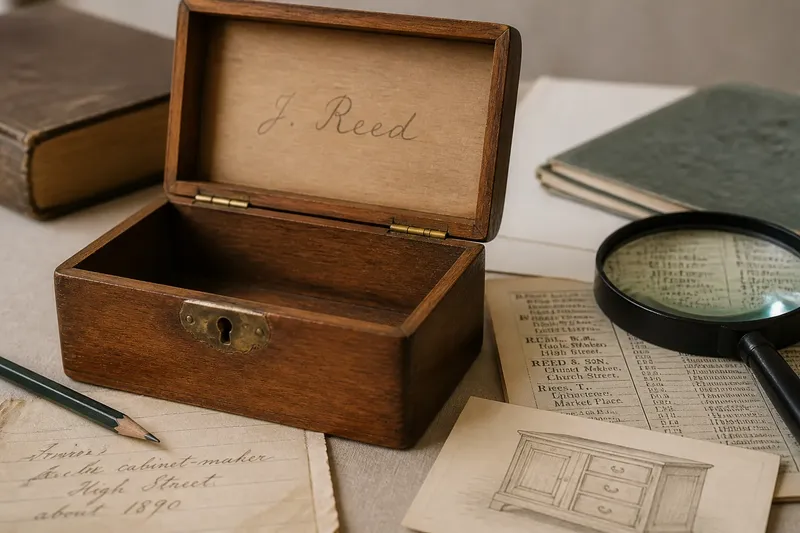
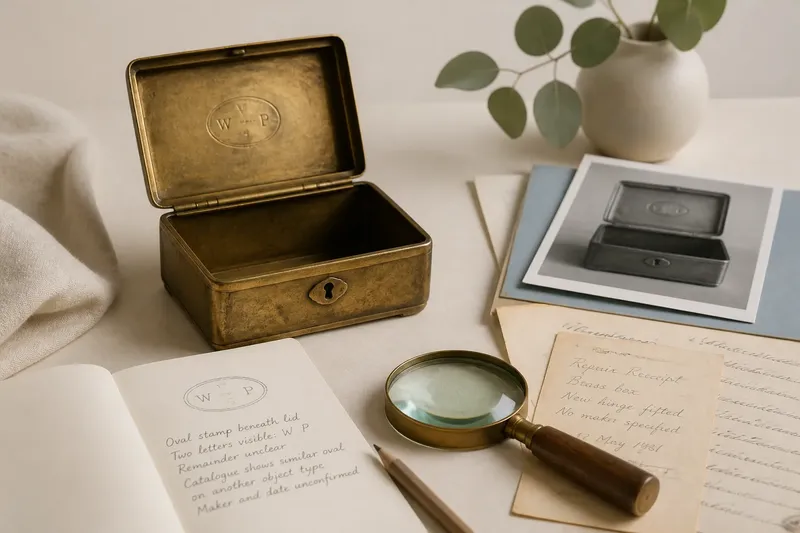
Look for a distinctive overlap between the document and the item. A maker, model name, unusual material, matching serial or stock number, or a description of a particular component can be more useful than a broad category. Note what is actually visible on the object, then compare it with the wording on the receipt without quietly filling in missing details.
Physical fit is another clue, but it is not a shortcut to certainty. A receipt kept in the same box as a watch might belong to that watch, yet boxes and papers can be reused or gathered together later. A date written on a tag, an old price sticker, or a matching repair note may strengthen the association; each clue should still be recorded separately.
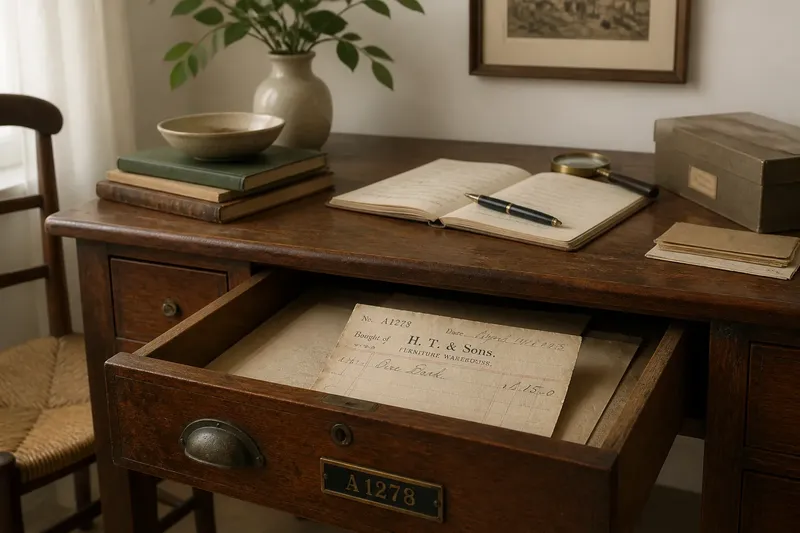
Say you inherit a wooden desk and find a shop receipt among papers stored in its drawer. The receipt names a desk from the same retailer and carries a date, while a label beneath the drawer has a matching stock code. You could record that the receipt appears to relate to the desk because the descriptions and code correspond; you would still leave the earlier owner and the route into the family open unless another record addresses them.
What does the receipt leave unanswered?
A receipt usually records a transaction, not a complete chain of custody. It may show that someone bought an item, but not whether they kept it, gave it away, sold it, or passed it to a family member. Even a named purchaser establishes a purchaser, not necessarily every later owner.
Paperwork can also be incomplete in ordinary ways. The item description may be vague, a name may be abbreviated, or a receipt may have been separated from an attachment that carried the useful details. A surviving copy can omit the back of the page, a handwritten note, or a second sheet. Missing information is a limit on what you can claim, not evidence that a particular event did—or did not—happen.
There may be a gap before the purchase as well. A receipt from a dealer does not necessarily reveal whether the dealer made the object, acquired it from another seller, or bought it from a previous owner. Unless the document says more, it dates the recorded sale rather than the object’s manufacture or first ownership.
How should you record uncertainty?
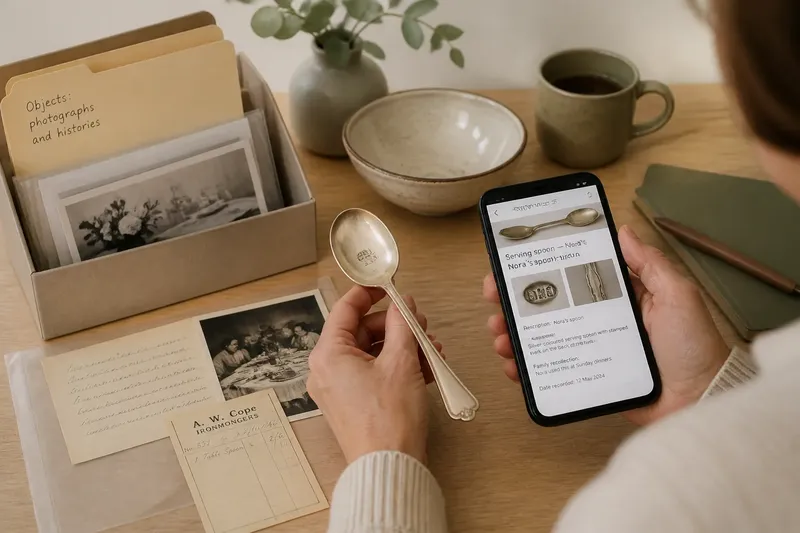
Keep the document’s wording apart from your interpretation. In a household record, you might note the receipt’s date and exact description, then add a separate sentence explaining why you associate it with the object. If the match rests on a shared code or distinctive feature, name that clue. If it rests only on where the paper was found, say so plainly.
Useful wording can preserve uncertainty without making the record vague:
- “Receipt describes a ‘desk’ from the named shop; no model or serial number is shown.”
- “Kept with the desk’s papers; its connection to this desk is plausible but not confirmed.”
- “Receipt names the purchaser; later ownership is not documented here.”
That approach helps a future reader distinguish a document’s direct evidence from family recollection or a reasonable inference. If a relative remembers that the desk came from an aunt, record the person’s account and, where possible, who shared it and when. Do not blend recollection into the receipt’s description as though both came from the same source.
How can you preserve the useful context?
Keep the receipt with the object’s record, but avoid attaching fragile paper directly to a surface. A sleeve made for document storage can protect it from handling; a clear label or note can explain which item it may concern and why. If you photograph it, capture the whole document, including handwritten additions and the reverse, and keep the original if it is still available.
Transcribe names and descriptions carefully, marking anything uncertain rather than guessing at faded writing. Record whether a detail is printed, handwritten, or added later if that distinction matters. For a household archive, a simple note such as “transcription checked against original” helps prevent a later copy from being mistaken for the receipt itself.
What questions help interpret a receipt?
Does a receipt prove the named person owned the object?
It supports the claim that the named person was recorded as a purchaser or customer, depending on the wording. It does not establish that the person kept or owned the object for its entire later history.
Can a receipt tell when an object was made?
Usually it dates a recorded sale, not manufacture. A seller’s description may mention a maker or model, but a separate production record or other evidence would be needed to establish when the item itself was made.
What if the receipt only says “chair” or “vase”?
Record that broad description accurately and look for independent clues, such as a matching stock number or distinctive feature. If none appears, keep the association tentative rather than assigning the receipt to one particular object as a fact.
Should a damaged receipt still be kept?
If it contains relevant information, retain it in a protective sleeve and make a clear image or transcription for routine reference. Mark unreadable areas as unreadable; completing them from memory can turn a useful fragment into a misleading record.
What is the most useful claim to preserve?
The value of a receipt lies in the precise claim it can support, not in the story one might wish it told. Record its date, seller, wording and any distinctive match to the object, then leave undocumented ownership changes visible as gaps. A careful entry about what the receipt cannot establish is part of the provenance too: it gives the next person a sound place to continue, without asking a small slip of paper to carry the whole past.