When Makers Began Signing Their Work
When makers began signing their work varied by trade and place. Trace the historical shift from workshop marks to personal signatures without mistaking a name for a date.
The common mistake in tracing when makers began signing their work is to look for a single starting date. That shortcut turns a varied history into a false timeline: a workshop stamp, a merchant’s label and an individual craftsperson’s signature all leave marks, but they answer different historical questions. The more useful enquiry is how a mark’s purpose changed across trades and settings.
Why is there no single beginning?
People marked objects for practical reasons long before a modern idea of the artist’s signature took shape. A mark could identify a workshop, indicate responsibility for a product, help goods move through trade or distinguish one maker’s output from another’s. Those customs did not begin everywhere at once, and they did not all develop into personal signatures.
Many objects were made collectively. An item might pass through several hands, while the visible mark named the workshop owner, merchant or business responsible for selling it. In other settings, makers left no name at all; the object’s form, materials or place of discovery may tell more about its origins than a signature would.
How did practical marks become personal signatures?
The shift was gradual and uneven. As some crafts developed stronger ideas of individual authorship, a name could become a claim about who made or designed an object, rather than simply a sign of the workshop or business behind it. Yet commercial identity and personal authorship continued to overlap.
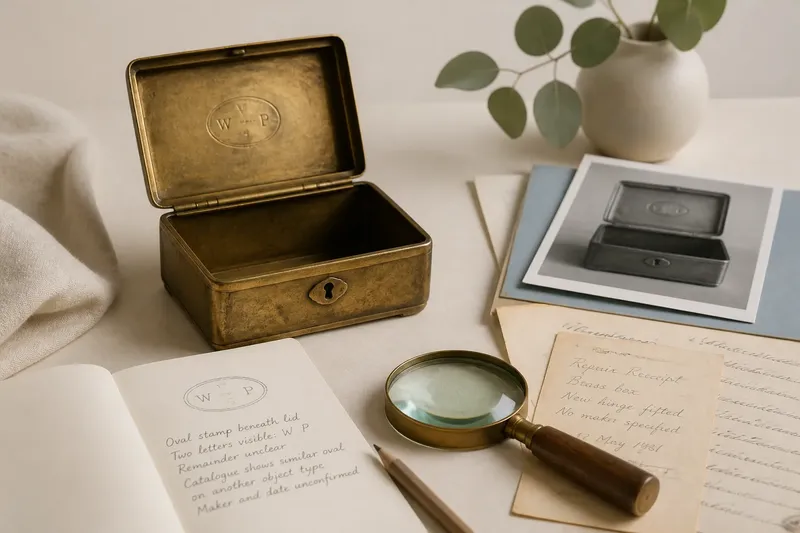
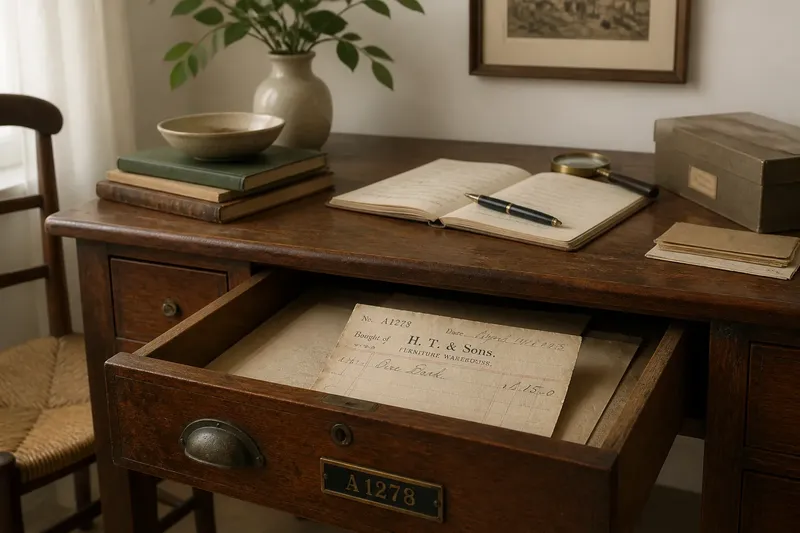
Different trades left different kinds of evidence. A potter might press a name into clay, a furniture workshop might attach a label inside a drawer, and a jeweller might use a small punch. These are possible practices, not a universal sequence: material, tools, local customs and the organisation of production all shaped how a mark was applied.
Later collectors and buyers often treated a signature as part of an object’s appeal. That growing interest in named makers did not erase older workshop systems, nor did it make every signed object the work of one individual. The question is not simply whether a name appears, but what role names played in that object’s particular trade and period.
What historical evidence can place a mark in its setting?
Begin with sources that explain the trade, not just examples of similar-looking marks. Museum catalogues, local archives, trade directories, guild records and old product catalogues can reveal whether a name belonged to a person, workshop, retailer or manufacturer. A matching name is only a lead; the place, material and kind of object should also make sense.
Look for changes in the object’s wider context. Construction, decoration, labels and family paperwork may help distinguish a workshop tradition from a later personal attribution. Keep the distinction clear in your notes: “name appears on underside” is an observation, while “the named person made the object” is an interpretation that needs supporting evidence.
It also helps to ask what evidence is absent. A mark may be too brief to identify a person, or a record may name a firm without identifying the workers who made its goods. A careful account can describe those limits without forcing a tidy conclusion.
How should you investigate a maker’s signature?
Record the historical question before searching. Are you trying to learn when a trade began using personal names, whether a particular workshop existed, or what a mark meant in its original setting? A focused question makes it easier to choose useful records and avoid treating every similar name as a match.
- If the mark names a business rather than a person, then check trade directories or local business records; if no reliable match appears, keep the attribution open.
- If a family letter mentions the object’s maker, then record its date, wording and connection to the item; if the link is unclear, treat the letter as context rather than proof.
- If a museum catalogue shows a comparable mark, then compare the object type, location and wording; if those details differ, note the difference instead of calling it a match.
- If a label appears to have been added after manufacture, then photograph it in place and seek conservation advice if it is loose; if its position is uncertain, avoid using it to date the object.
- If construction or materials sit awkwardly with a proposed period, then record that conflict and consult a relevant specialist; if the evidence remains mixed, present more than one possibility.
- If an archive identifies a maker but not the people who worked in the shop, then describe the attribution at workshop level; if individual authorship cannot be supported, do not assign the whole object to one hand.
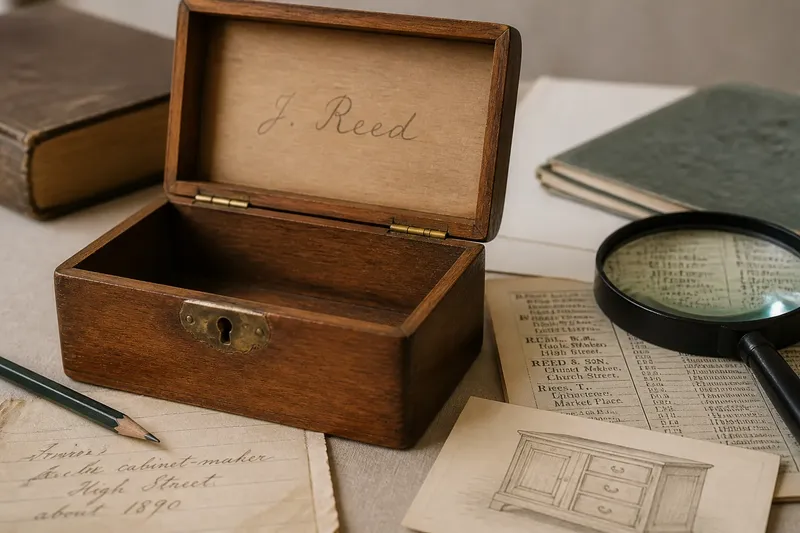
Say you inherit a wooden box with “J. Reed” pencilled inside its lid, along with a family note saying it came from a local cabinet-maker. You photograph the box and inscription, transcribe the note, then check a local directory and find a business listed under a similar name; because the directory does not connect that business to the box, the careful record is “possible workshop link”, not “made by J. Reed”. If a later family letter names the box and describes its purchase, that could strengthen the connection while still leaving the maker’s individual role unresolved.
What do readers ask about the history of maker signatures?
Did makers sign objects in ancient times?
Some objects from ancient societies carry names or marks, but a name does not necessarily represent the modern idea of an individual artist’s signature. It may identify a workshop, official, owner or another person connected with production or trade.
When did personal signatures become common?
There is no single date that applies across materials and regions. Personal signatures gained prominence unevenly, alongside older marks used for workshops, trade and responsibility.
Does a signed object identify its maker?
Not by itself. The name might refer to a business, retailer, owner or later contributor, so historical records and the object’s context matter.
Can an unsigned object still have a known history?
Yes. Labels, family papers, workshop records, construction and documented ownership can all help trace an object without a personal signature. Their value depends on how securely each piece of evidence is connected to the item.
What should a useful historical record include?
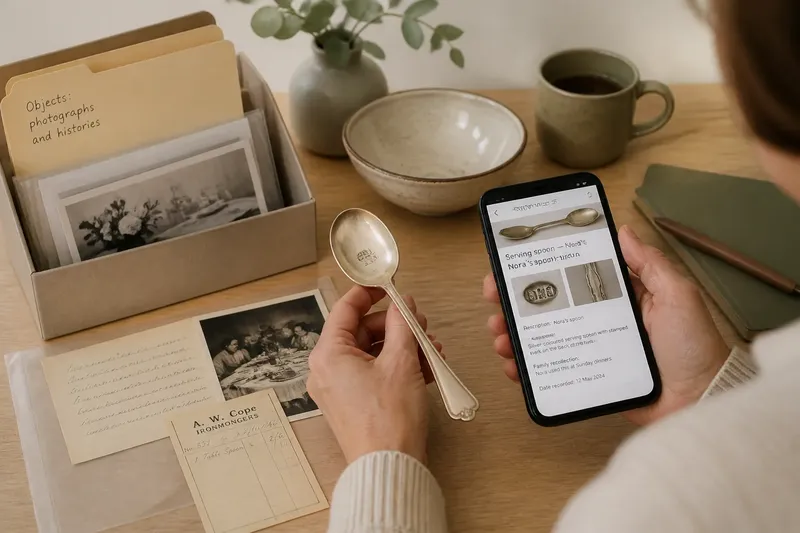
Keep observations, sources and interpretations distinct. Record the wording and location of the mark, the kind of object, any associated paperwork and the source of each claim. If a source supports only a workshop connection, do not silently turn it into an individual attribution.
- If the inscription is legible, then transcribe it exactly, including spelling and punctuation; if a character is uncertain, mark it as unreadable rather than guessing.
- If you have an image of the whole object and a close view, then keep both original files; if only one view exists, take the missing view where it is safe to do so.
- If a source names a person, then note its title or holding institution and the wording that matters; if it names only a business, record the attribution at business level.
- If family paperwork refers to the object clearly, then preserve the document’s wording and how it was passed down; if the connection is vague, label it as family context.
- If sources agree on a point, then note which details they share; if they conflict, preserve both accounts and the reason for uncertainty.
- If a conclusion could affect a sale, inheritance or insurance decision, then seek a suitably qualified specialist; if it is a family-history question, a local archive or museum may help identify useful records.
When tracing when makers began signing their work, think in terms of changing practices rather than a universal first signature. A mark’s historical value often lies in what it reveals about work, trade and identity—and in the limits it leaves visible for the next person to investigate.